

Vital parameters are the baseline values that show how the body functions. Doctors and nurses use this data to quickly get a picture of a person’s health. Without these measurements, it would be much more difficult to recognize problems in time.
In this article, you will read exactly what vital parameters entail. Additionally, we discuss which values are measured most frequently and why this is so important. This provides you with a clear and practical overview of the subject.
What do we mean by vital parameters?
Vital parameters are measurable body values that provide information about the body’s basic functions. Examples include heart rate, blood pressure, respiration, and temperature. These values are often measured together during a medical check-up.
The purpose of these measurements is simple. They provide a quick impression of how stable a person’s body is at that moment. When a value deviates from the norm, it may indicate an underlying problem.
Therefore, vital parameters often form the starting point of every medical examination. They are quick to measure and provide immediately usable information.
Heartbeat as the First Signal
Heart rate indicates how often the heart beats per minute. In a healthy adult, this is usually between 60 and 100 beats per minute. Athletes often have a lower heart rate due to their trained fitness.
An abnormal heart rate can have various causes. Stress, fever, dehydration, or heart problems are examples of these. Therefore, the heart rate is always one of the first things that is checked.
Respiration and Oxygen Level
The respiratory rate shows how often someone breathes per minute. On average, an adult breathes between 12 and 20 times per minute. Breathing that is too fast or too slow can indicate shortness of breath or anxiety.
Oxygen saturation is also a vital parameter. This value indicates how much oxygen the blood contains. A healthy value is usually above 95 percent, and lower values require extra attention.
Blood Pressure and What It Tells
Blood pressure consists of two numbers: systolic and diastolic. These numbers show how much pressure the blood exerts on the vessel walls. A healthy blood pressure averages around 120 over 80.
Prolonged high blood pressure can be harmful to the heart and blood vessels. Conversely, blood pressure that is too low can cause dizziness or fainting. Therefore, regular check-ups are advisable, especially for the elderly.
Temperature as an Indicator of Balance
Body temperature indicates whether the body is in balance. Normally, it is around 37 degrees Celsius. During an infection, the temperature often rises because the body is working hard to fight pathogens.
However, a temperature that is too low is just as much a sign of danger. Therefore, temperature measurement is a standard part of determining vital parameters, especially in vulnerable or sick people.
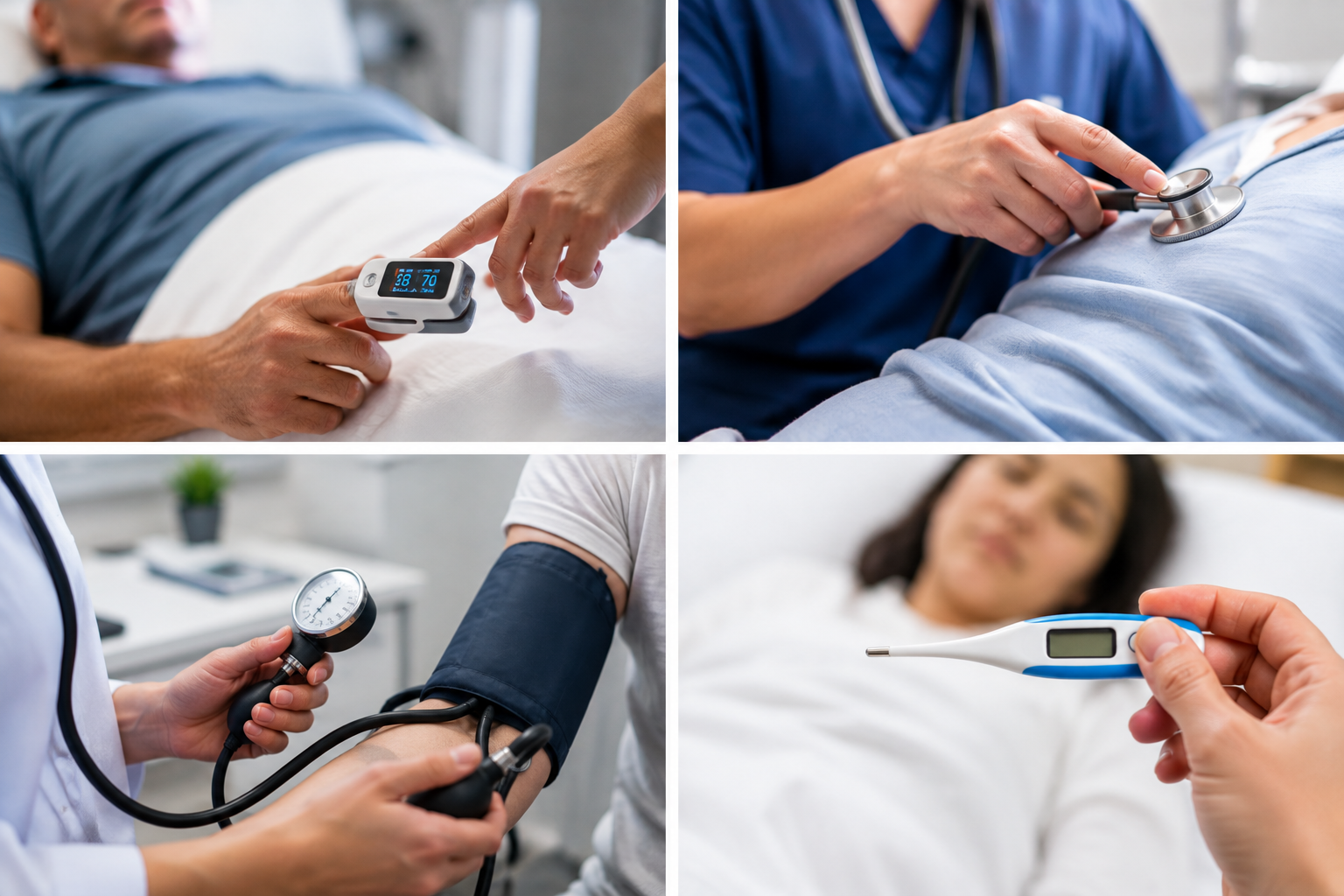
Why Are Vital Parameters So Valuable?
Vital parameters provide quick insight into a person’s state of health. This allows healthcare providers to immediately see if a serious situation exists. This makes it possible to provide the right care quickly.
Moreover, these values help track changes over time. If the parameters deteriorate slowly, it is often an early warning signal. This allows doctors to intervene before a problem becomes more serious.
In hospitals, vital parameters are therefore continuously monitored. These measurements also play a crucial role during surgeries, deliveries, and emergency situations.
Vital Parameters in Emergency Situations
In the event of an accident or sudden illness, vital parameters are often the first things emergency responders look at. They then quickly assess consciousness, breathing, and circulation. This is usually done according to a fixed, structured method.
First, it is checked whether the airway is clear. Next, it is checked whether the person is breathing normally. After that, attention focuses on the circulation, for example by checking the pulse.
This rapid assessment helps determine what care someone needs immediately. In emergency situations, time can make the difference here. Therefore, basic knowledge of vital parameters is also useful for people without medical training.
How Often Are Vital Parameters Checked?
How often checks are needed depends on the situation. For a healthy person during a routine consultation, a single measurement is usually sufficient. However, for a sick patient in the hospital, this is done much more frequently.
In the intensive care unit, vital parameters are often continuously measured using specialized equipment. This allows for an immediate response if a value changes. People with a chronic condition, such as high blood pressure, can also take regular measurements themselves at home.
If in doubt, it is always wise to contact a doctor. Especially with unexpected symptoms, it is better not to wait too long.
The Role of Technology
Smart devices are playing an increasingly important role in tracking vital parameters. Smartwatches and fitness trackers, for example, can measure heart rate and oxygen levels. This makes self-monitoring more accessible to everyone.
However, technology does not replace a medical assessment. These devices can help identify trends and take timely action. Nevertheless, a doctor or nurse remains necessary for a reliable diagnosis.
Veelgestelde vragen over vitale functies
1. Wat zijn de 6 parameters van vitale functies?
De zes veelgebruikte parameters zijn hartslag, ademhalingsfrequentie, bloeddruk, lichaamstemperatuur, zuurstofsaturatie (SpO₂) en bewustzijnsniveau. Welke parameters worden gemeten, kan verschillen per patiënt en situatie.
2. Wat zijn de 7 vitale functies?
Er bestaat geen wereldwijd vaste lijst van precies zeven vitale functies. Naast de gebruikelijke metingen kunnen zorgverleners bijvoorbeeld pijn als extra parameter beoordelen. De precieze indeling hangt af van de zorgsituatie en het gebruikte protocol.
3. Wat zijn de 7 vitale waarden?
Met vitale waarden worden meestal meetbare gegevens bedoeld, zoals hartslag, ademhaling, bloeddruk, temperatuur, zuurstofsaturatie, bewustzijn en pijnscore. Deze waarden helpen zorgverleners om veranderingen in de gezondheid op te merken.
4. Wat zijn 9 vitale functies?
Er is eveneens geen standaard medische lijst die overal uit negen vitale functies bestaat. Wanneer een uitgebreidere controle nodig is, kunnen naast de basiswaarden ook zaken zoals bloedsuiker, pijn, bewustzijn en urineproductie worden beoordeeld. De exacte metingen zijn afhankelijk van de patiënt en de medische situatie.
Conclusion
Vital parameters form an important part of good healthcare. They provide quick insight into heart rate, respiration, blood pressure, and temperature. This allows problems to be recognized and treated early.
Regular monitoring of vital parameters helps not only healthcare providers but also individuals to better understand their health. Whether it concerns a routine check-up or an emergency situation, these values remain indispensable. Therefore, it always pays to acquire basic knowledge about vital parameters.